4. Training Volume and Recovery:
Elites can handle much higher training volumes (100+ miles/week) with better recovery, which improves their endurance and reduces pace drop-off in longer races.
Amateurs often can't sustain the same volume or intensity, leading to bigger slowdowns in longer events.
Example:
Elite Runner:
800m: ~1:45 (pace ~3:30/mile)
10K: ~27:00 (pace ~4:20/mile)
Marathon: ~2:05 (pace ~4:45/mile)
The pace slows by ~25% from 800m to marathon.
Amateur Runner:
800m: ~2:30 (pace ~5:00/mile)
10K: ~45:00 (pace ~7:15/mile)
Marathon: ~3:30 (pace ~8:00/mile)
The pace slows by ~60% from 800m to marathon.
Mathematical Confirmation:
The relationship between race pace and distance is often modeled by the Riegel formula:
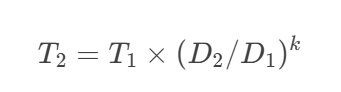
where k is a "fatigue factor" (typically ~1.06 for elites, ~1.15 for amateurs). A lower
k means less slowdown over distance, confirming elites have smaller pace gaps.
